 International19 May 2026
Trump Cancelled Planned Attack on Iran at Request of Gulf States
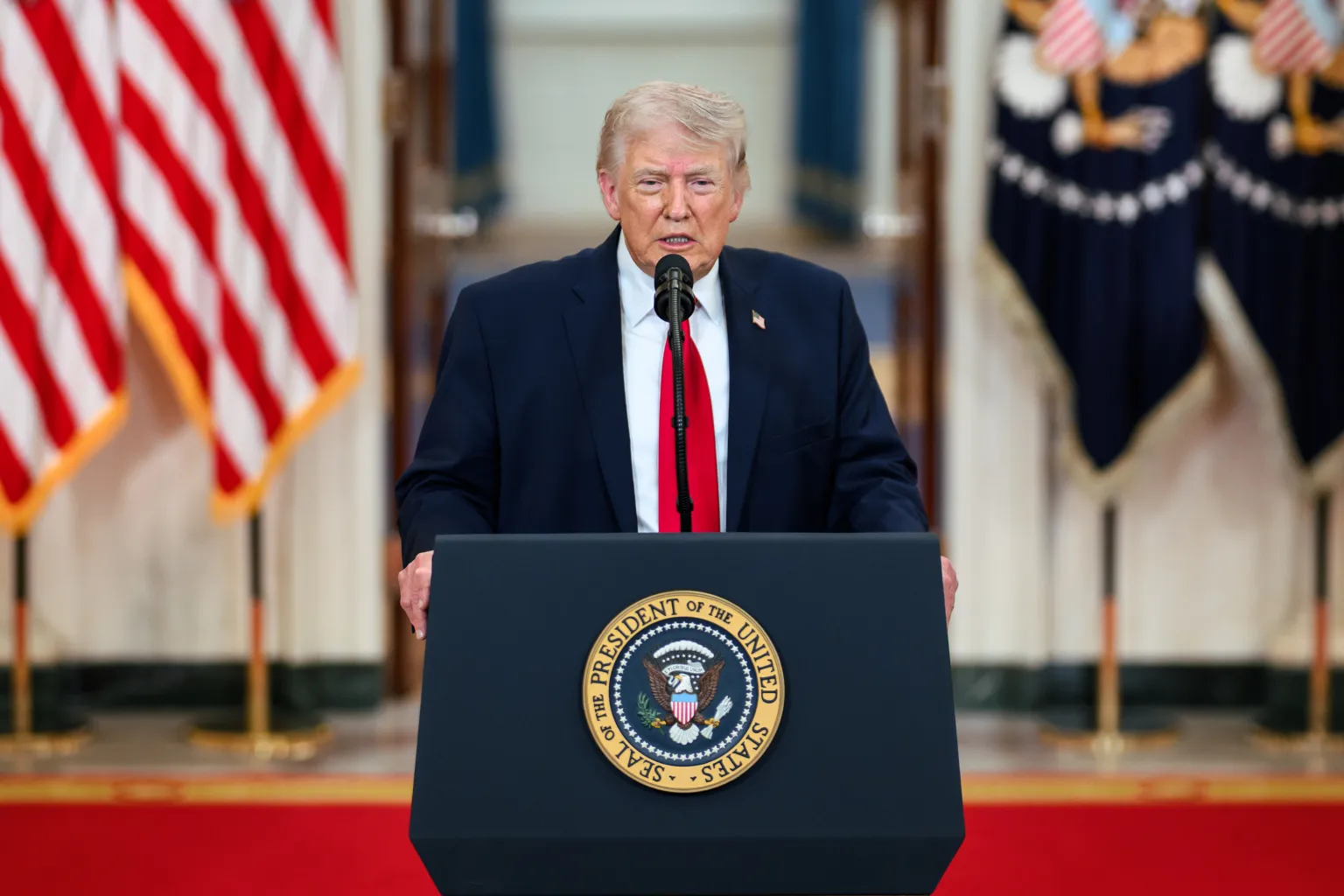
Read NewsPresident Donald Trump announced that he has cancelled a planned US attack on Iran that was scheduled for Tuesday, following requests from the leaders of Qatar, Saudi Arabia and the United Arab Emirates.
In a message, Trump said serious negotiations are currently underway regarding a possible agreement with the Islamic Republic of Iran, and that Arab leaders believe a deal acceptable to both the United States and countries across the Middle East can be reached.
Trump also warned that if an acceptable agreement is not achieved, the United States is prepared to launch a full-scale military assault on Iran at very short notice.
Earlier on Monday, May 18, Iran announced that it had responded to a US proposal aimed at ending the war.
 Afghanistan12 May 2026
Zakia Khudadadi crowned European Para Taekwondo champion
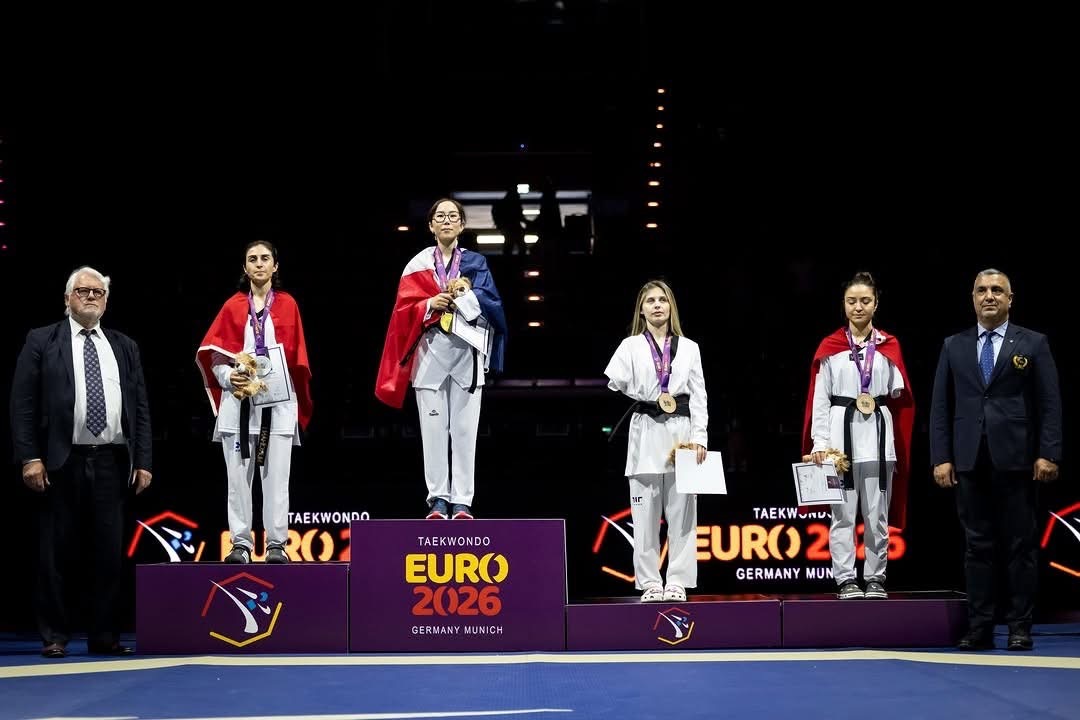
Read NewsZakia Khudadadi, the Afghan-born Para Taekwondo athlete representing France, won the gold medal at the 2026 European Para Taekwondo Championships after defeating opponents from Italy, Georgia and Türkiye.
Competing in the women’s 47kg category, Khudadadi secured first place on Monday, May 11, marking her second European championship title after previously winning gold in 2023.
The 26-year-old athlete, who now holds French citizenship, represented France in the competition and once again demonstrated her dominance on the European stage.
Khudadadi had previously made history at the Paris 2024 Paralympic Games, where she won a bronze medal for the Refugee Paralympic Team, becoming the first female athlete from Afghanistan to earn a Paralympic medal.
The 2026 European Taekwondo and Para Taekwondo Championships began on Monday and will continue until Thursday this week.
 Afghanistan12 May 2026
Pakistan’s Defense Minister Threatens Kabul Administration
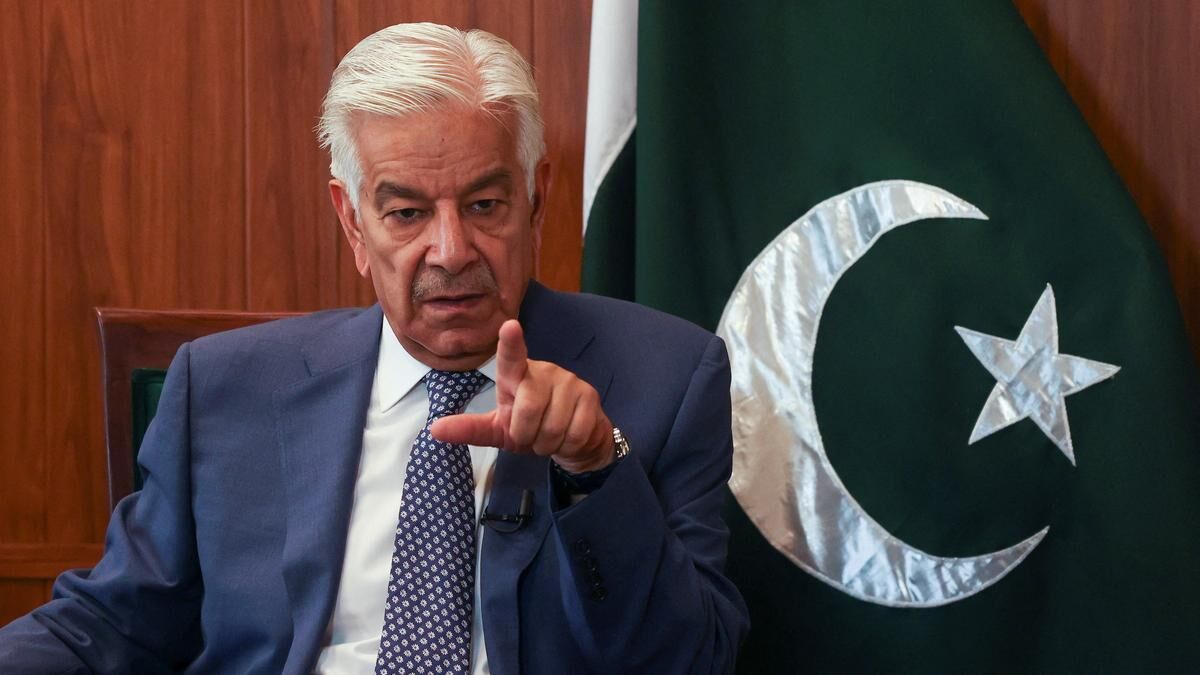
Read NewsKhawaja Asif, Pakistan’s Defense Minister, has warned that the country may carry out decisive operations against the ruling group in Afghanistan in response to a militant attack on a police checkpoint in Bannu district of Khyber Pakhtunkhwa province.
According to Geo News, Khawaja Asif said that Pakistan would deal with the Kabul administration in the same way it responded during last year’s war with India.
India and Pakistan engaged in a four-day conflict in May last year following a terrorist attack on Indian soil. Pakistan claims that it inflicted heavy damage during the confrontation, including on advanced Indian fighter jets.
On Monday, Khawaja Asif claimed that India’s proxy war against Pakistan continues under the umbrella of the ruling group in Afghanistan. He said: “No one in human history has been as ungrateful as the Taliban.”
Pakistan supported the ruling group during its two-decade war against the former Afghan government and US forces. Khawaja Asif had also officially expressed happiness after the fall of the former government and the group’s return to power.
Pakistan’s Defense Minister said: “We will avenge every drop of blood shed as a result of this terrorism, and we will not rest until the complete elimination of terrorists.”
On Monday, Pakistan’s Foreign Ministry summoned the chargé d’affaires of the Kabul administration’s embassy in Islamabad over the May 9 attack on a police checkpoint in Bannu district and handed over a protest note.
Pakistan has claimed that the attack was planned inside Afghanistan. The Foreign Ministry said that, based on investigations, evidence, and intelligence information, the attack was orchestrated by militants based in Afghanistan.
Fifteen Pakistani security personnel were killed in the attack.
 Afghanistan11 May 2026
Mohaqiq: Khalilzad Was Behind the Imposition of Ashraf Ghani’s Government
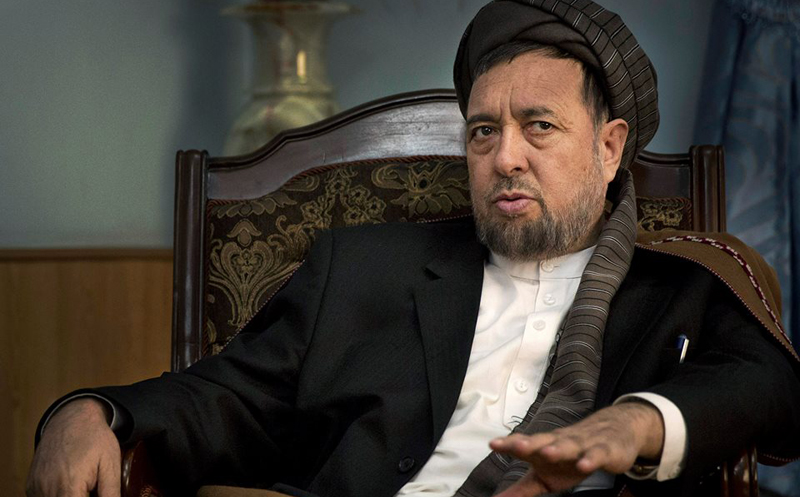
Read NewsMohammad Mohaqiq, leader of the Hezb-e Wahdat-e Islami Afghanistan, has reacted to recent remarks by Zalmay Khalilzad about Ashraf Ghani, saying that if Ghani was truly a “corrupt and cowardly” figure, the United States would not have placed him in power twice through direct political backing and external pressure.
Mohaqiq claimed that in both 2014 and 2020, the United States directly intervened politically and even used threats of military pressure to prevent Abdullah Abdullah’s electoral team from forming a parallel government, ultimately paving the way for the continuation of Ashraf Ghani’s administration.
He also accused Zalmay Khalilzad of “deception and irresponsibility,” stating that the United States had played with the fate of the people of Afghanistan.
Following Afghanistan’s disputed presidential elections in 2014 and 2020, deep disagreements emerged between Ashraf Ghani and Abdullah Abdullah over the election results. In both instances, a U.S.-brokered political agreement was reached to divide power between the two sides.
 Afghanistan1 May 2026
Richard Bennett urges Kabul authorities: Immediately and unconditionally release all detained journalists
Read NewsRichard Bennett, the UN Special Rapporteur on the human rights situation in Afghanistan, has called on the Kabul authorities to immediately and unconditionally release all detained journalists. Speaking ahead of World Press Freedom Day, he urged the authorities to ensure that media workers can exercise their right to freedom of expression and carry out their work without fear of reprisals, harassment, or arrest.
According to the Afghanistan Journalists Centre, at least 34 cases of journalist detentions were recorded in 2025. The situation is even more difficult for women journalists, who face deep-rooted and discriminatory barriers, including restrictions on movement and mandatory dress codes.
Meanwhile, Afghanistan has experienced an unprecedented decline in press freedom. Based on global media freedom rankings, the country now stands at 175 out of 200 countries.
Since the return of the Kabul authorities to power in August 2021, a large number of journalists have fled the country, several media outlets have shut down, and many of those still operating have increasingly turned into propaganda platforms.
Journalists are also being punished for their activity on social media. So-called criminal court regulations include provisions that effectively criminalize criticism of public and religious figures through vague, subjective, and ideologically defined terms. This has led to further suppression of public debate, widespread self-censorship, and an atmosphere of intimidation affecting not only journalists but also activists, academics, and perceived critics.
 Afghanistan12 April 2026
Call for the Release of Imprisoned Journalists by Afghanistan Journalists in Exile
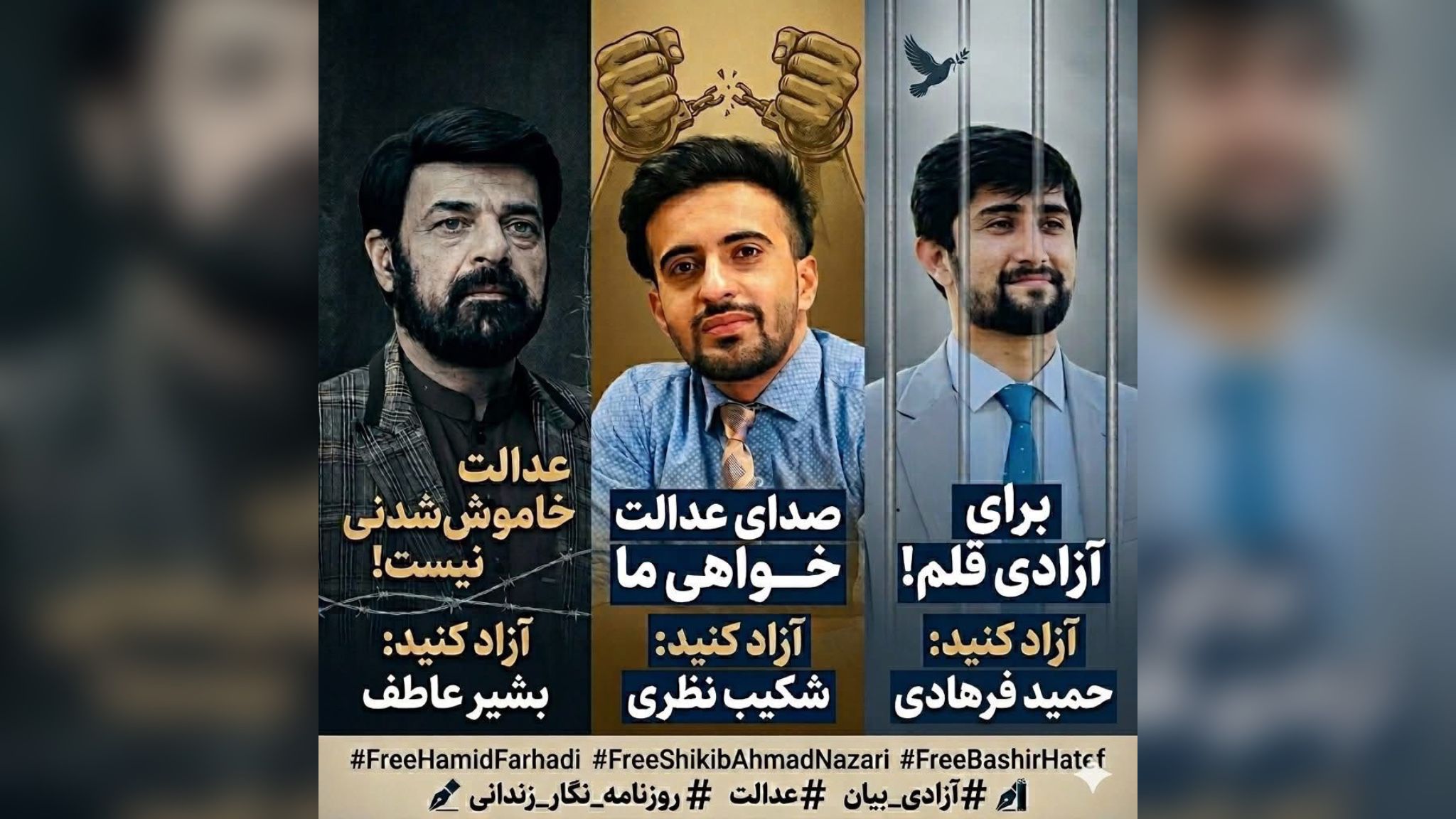
Read NewsA number of Afghanistan journalists in exile have launched a social media campaign, calling for the release of their detained colleagues held by the ruling group in Afghanistan.
The campaign highlights the cases of Shakib Nazari, Hamid Farhadi, and Bashir Hatef, who remain in detention. Organizers say their arrests reflect broader and sustained pressure on independent media in the country.
Shakib Nazari was arrested in July–August 2025 on charges of cooperating with foreign media and was later transferred by the Kabul authorities to Bagram prison.
Bashir Hatef was also detained during the same period on allegations of working with Afghan media institutions.
Hamid Farhadi was arrested on September 3, 2024 by forces of the Interior Ministry of the ruling group in Kabul. He has been sentenced to two years in prison for allegedly collaborating with exiled media outlets and is currently held in Bagram prison.
Reports indicate that the suppression of media continues in a systematic manner. Dozens of journalists have been detained, tortured, or forced out of their profession, while others remain behind bars.
Critics argue that these actions demonstrate a lack of tolerance for independent voices and pose a serious threat to the free flow of information in Afghanistan.
 Afghanistan2 February 2026
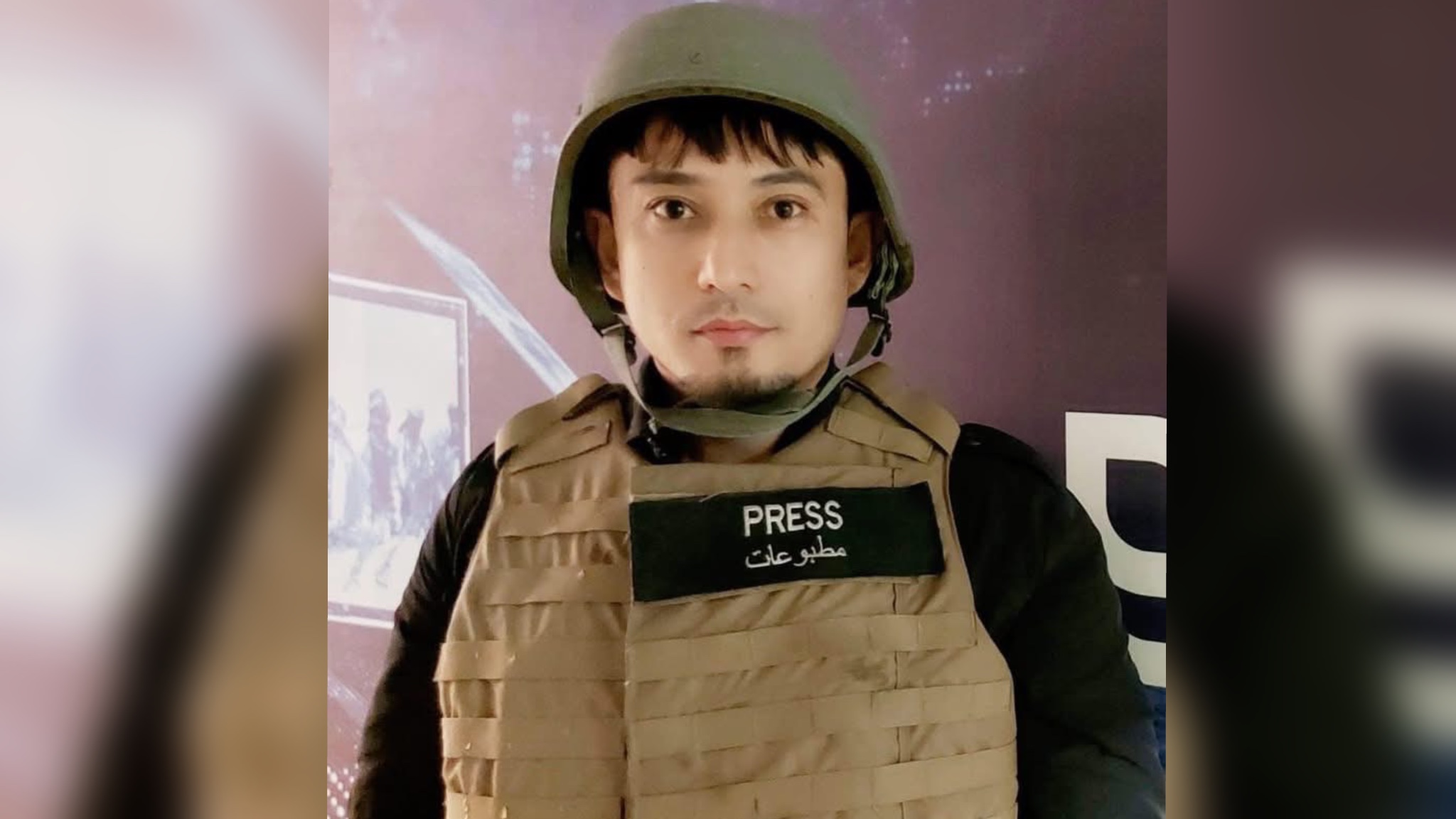
Sulaiman Arian, journalist from Afghanistan, arrested in Islamabad
Read NewsSulaiman Arian, a journalist from Afghanistan, was arrested today, Monday, by Pakistani police in the city of Islamabad.
Pakistan has intensified the arrest of migrants, including journalists, and has detained several journalists over the past two weeks.
 Afghanistan1 February 2026
Takhar University Professor: I Was Dismissed on Charges of Illiteracy
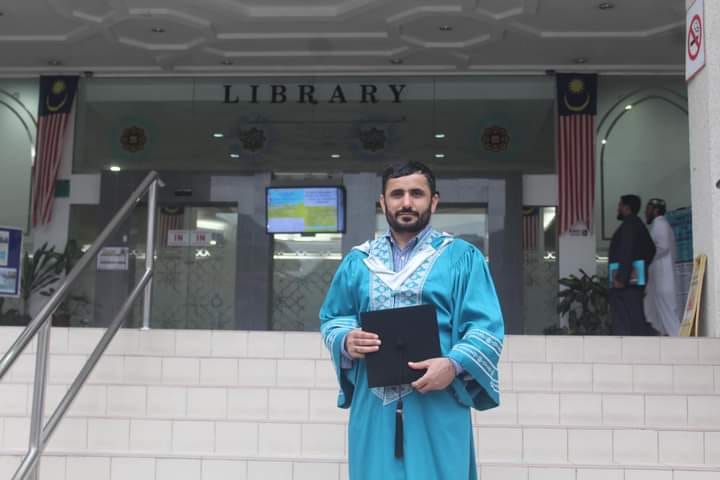
Read NewsHabib Ebadi, a professor at Takhar University, announced in a post on his Facebook page that he, along with several of his colleagues, has been dismissed from the university by the Ministry of Higher Education over what was described as “illiteracy” and “lack of capacity.”
In his note, he criticized the standards governing the education system, saying that in a structure where competence is reduced to obedience, there is little room left for scholars and academics. Ebadi expressed hope that one day knowledge will not be treated as a crime and that universities will regain their true purpose.
Habib Ebadi was a professor at the Faculty of Sharia at Takhar University and earned his master’s degree from the International Islamic University Malaysia.
 Afghanistan1 February 2026
United Nations: Tablet Drug Use Is Rising Among Afghan Youth
Read NewsThe United Nations Office on Drugs and Crime (UNODC), in its latest assessment, has stated that drug consumption patterns in Afghanistan remain dominated by traditional substances.
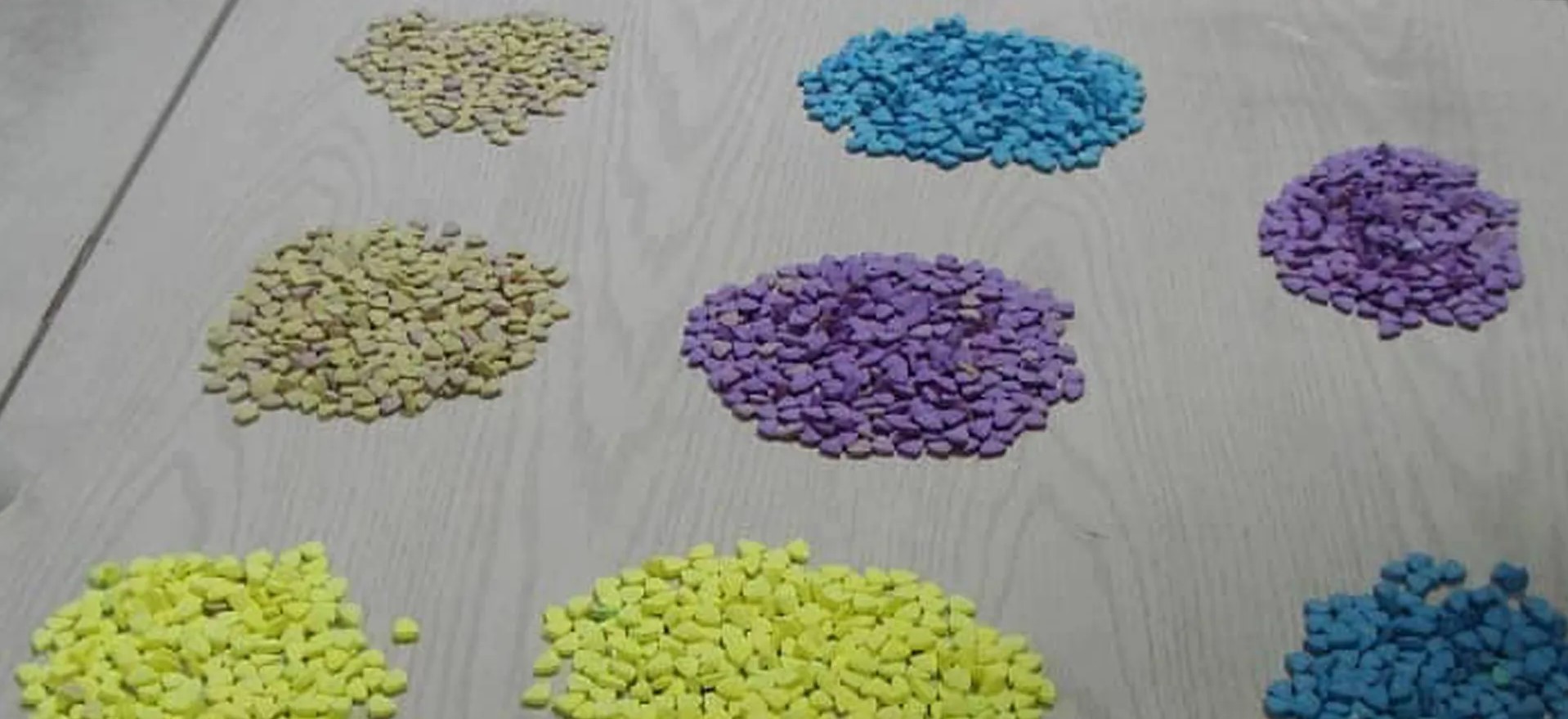
According to the report, cannabis is the most commonly used drug among Afghan men at 47 percent, followed by opium at 19 percent, tablet drugs at 11 percent, and methamphetamine (crystal meth) at seven percent.
The report, which is part of the “National Drug Use Survey in Afghanistan,” shows that while poppy cultivation has relatively declined, the use of synthetic drugs and the misuse of opioid medications are on the rise.
The United Nations emphasizes that poverty, unemployment, mental health challenges, and limited access to treatment services are among the main drivers of addiction in the country. Rising drug use among young people—particularly the consumption of tablet drugs—has become a growing concern.
 Afghanistan1 February 2026
Experts: SIGAR Reports Were Ineffective in Curbing Corruption
Read NewsAs SIGAR concluded its operations on Saturday, 11 Dalwa 1404, a number of experts say that despite the organization’s well-documented and detailed reports, the lack of practical solutions and the inattention of successive U.S. and Afghan governments prevented it from having a real impact on curbing corruption.
Economic analyst Bashir Dodyal said: “SIGAR’s reports were largely accurate, but they were not effective in promoting transparency, because they did not offer solutions or clearly identify who was responsible and who should be prosecuted.” Zabihullah Mujahid, reacting to SIGAR’s closure, stated that the institution “did not have any significant impact on Afghanistan.”
SIGAR was established in 1387 (Solar Hijri) by the U.S. Congress, and over nearly 17 years, it reviewed billions of dollars in U.S. spending on Afghanistan’s military, development, and humanitarian sectors. According to its latest report, the U.S. Congress allocated approximately $144.7 billion for Afghanistan’s reconstruction between 1381 and 1400 (Solar Hijri).
Fetching location...